
The ant species found in Quebec often intrigue homeowners, especially in September when they remain active and visible. They can be spotted in the house, on the patio, or throughout the garden. Yet not all ants are alike, and some cause more damage than others.
Recognizing the main species helps you understand their behavior and know how to respond.
Why identifying ant species matters
Identifying ant species isn’t just a matter of curiosity. Each species has its own lifestyle, food preferences, and ways of invading homes. For example, some simply look for crumbs in the kitchen, while others tunnel through wood and threaten a building’s structure. By understanding their specific traits, it becomes easier to prevent an infestation or choose the right treatment.
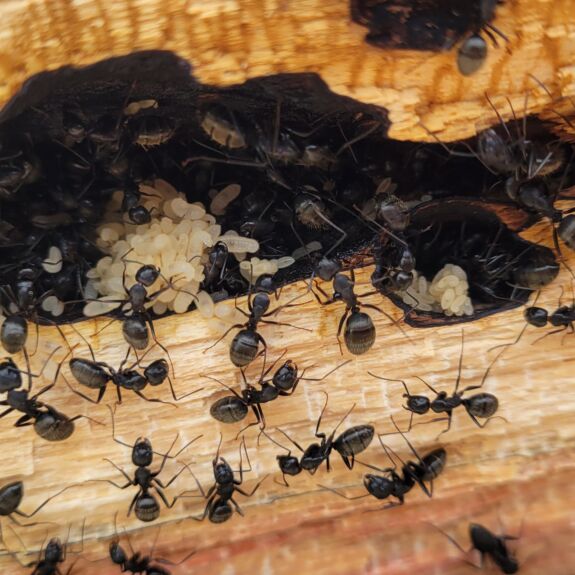
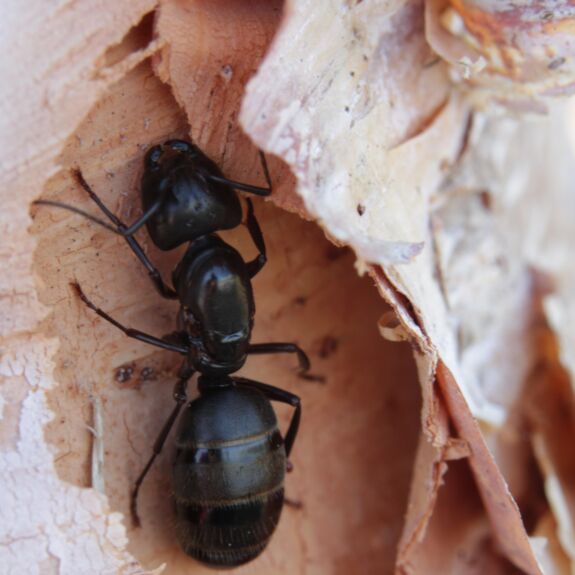
Carpenter ant: the most feared
The carpenter ant is probably the most dreaded ant species in Quebec. Black in color and measuring between 6 and 13 mm, it stands out for its large size and powerful mandibles. Contrary to popular belief, it does not eat wood; it excavates it to create galleries and nests.
Signs of its presence include:
- Wood shavings near baseboards or windows
- Faint scratching sounds in walls
- Larger-than-average ants moving through the house
A carpenter ant nest can quickly expand and cause significant structural damage.
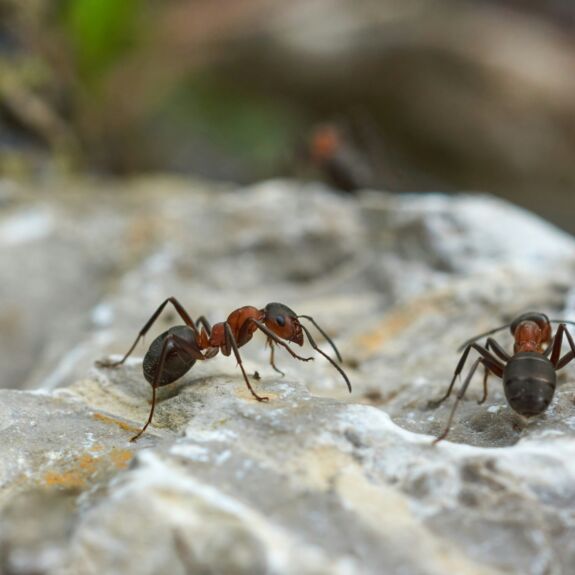

Pavement ant: the crack specialist
Another frequent species, the pavement ant, favors soil, sidewalks, and cracks in paving stones. These brown or black ants, about 3–4 mm long, are easy to recognize by the small mounds of granular soil they deposit between stones or along foundations.
Although they don’t destroy wood like carpenter ants, they can create cosmetic issues and weaken paved structures. They also venture indoors in search of sugary foods.
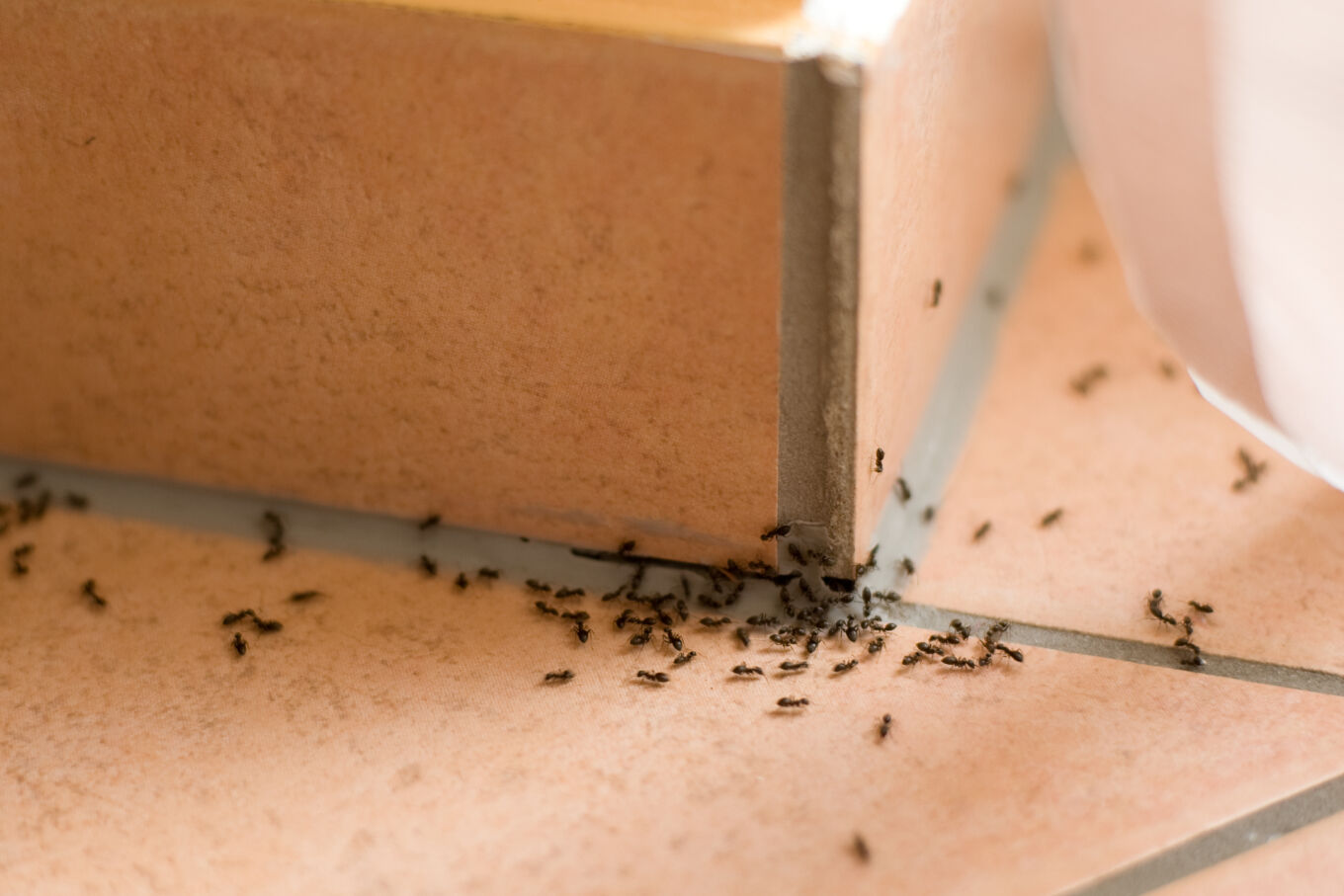
Pharaoh ant: tiny but invasive
The pharaoh ant is another well-known species in Quebec, especially in apartment buildings and heated environments. Minuscule (barely 2 mm) and yellowish to light brown, it often goes unnoticed until it forms vast colonies.
It reproduces quickly and creates multiple queens in a single nest, making control difficult. You’ll often find it in kitchens, pantries, and damp areas. Its ability to infiltrate small spaces makes professional help almost essential for eradication.
Other common ant species
Besides these three main ones, several other ants deserve mention:
- Odorous House Ant: Dark brown or black, it releases a foul odor when crushed and is strongly attracted to sugar, often moving in well-organized trails.
- Acrobat Ant: Identifiable by the way it raises its abdomen when threatened; usually found outdoors near damp wood.
- Harvester Ant: Rarer, it carries seeds and plant debris and is more common in rural or wooded areas.
These species don’t always cause major damage, but they remain a nuisance when they invade a home.
How to tell ant species apart
To identify ant species, pay attention to key factors:
- Size: Carpenter ants are the largest, while pharaoh ants are tiny.
- Color: Deep black, brown, yellowish—each species has distinctive shades.
- Behavior: Some seek sugar, others prefer wood or soil cracks.
- Nest clues: Wood shavings, small sand mounds, or wall infiltration.
Observing these details helps you determine which species you’re dealing with.
Preventing ant infestations
Regardless of the species, a few simple steps help limit their appearance:
- Seal cracks and entry points around the house.
- Store food in airtight containers.
- Clean surfaces regularly to avoid sugary or greasy residues.
- Repair leaks and reduce humidity.
- Keep firewood away from the house.
These measures reduce risk, but some infestations require professional intervention.
When to Call an Expert
If ants appear in large numbers, seem to come from inside walls, or if prevention measures fail, it’s time to call a specialist. At VEXT, our technicians know the ant species present in Quebec and tailor their methods to each situation.
Our packages include exterior and interior protection programs, with personalized follow-ups and practical advice. We prioritize environmentally friendly approaches while ensuring maximum effectiveness.
Know the species to act effectively
Quebec’s ant species are numerous and varied. Some, like the carpenter ant, pose a serious threat to homes, while others are mainly a nuisance. Telling them apart is essential for taking appropriate action.
In September, when their activity remains high, watch for key signs such as size, color, behavior, and nesting patterns. And if you’re unsure or notice a persistent infestation, the VEXT team is ready to help you regain a healthy, protected home.