Description
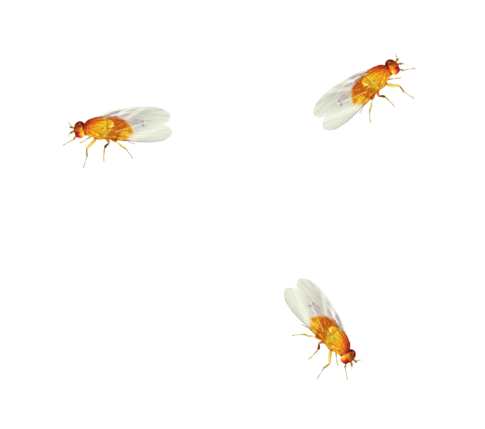
Fruit flies are small (3 mm long), with red eyes and a paler body than most other species. Better known as fruit flies or vinegar flies, drosophilae include more than 177 different species in North America. Drosophila means “likes dew,” meaning that this species of flies needs humidity to reproduce. These flies are found everywhere, in houses, restaurants, fruit stores, bars and anywhere else where fruit and vegetables are found. They can get into buildings in all kinds of ways, because of garbage being located near outside doors, garbage cans or even a compost bin near an open window.
For restaurants, the presence of these files is sometimes due to damaged fruit or vegetables in which they laid their eggs. This is the case for cases of tomatoes or even bags of onions, because of the rich potential for sugar in food that attracts them. Draught beer systems are also an ideal development environment for these midges, if preventive measures are not taken.
In an office building, the recycling bin is sometimes the source of fruit flies because of the present of unrinsed soft drink cans that offer an ideal environment for the development of these small pests.
Most of the time, the problem is benign. However, the situation becomes a concern in a food production environment. Fruit flies then become a health problem; they increase the risk of cross-contamination of food, in addition to transmitting pathogens that are harmful to humans.
A drosophila fly lays an average of 500 eggs each time. It is therefore important to prioritize control of laying sites rather than the adult specimens. Remember that on average, fruit flies only live two weeks on average.
Development
Fruit flies develop extremely quickly, especially in warm and humid environments. Their life cycle is short: the egg hatches in less than 24 hours, the larva transforms into a pupa within 4 to 6 days, and becomes an adult in about 10 days. A single female can lay several hundred eggs during her lifetime, which explains how fast an infestation can spread.
These insects feed mainly on sugary and fermented matter: ripe fruits, damaged vegetables, juice, beer, wine, or even garbage residues. Indoors, their presence is often linked to forgotten food left on a counter, poorly sealed organic waste, or sticky containers.
Adult fruit flies live only about two weeks, but since they reproduce constantly, their population can renew and grow exponentially if sources of food and humidity are not eliminated.
Prevention
Here are some simple but effective precautions to limit the presence of fruit flies:
- Store fruits and vegetables in the refrigerator or in airtight containers.
- Regularly inspect fruit baskets, bags of onions or potatoes, as well as crates of vegetables.
- Quickly discard spoiled or overripe food.
- Rinse recyclable containers (cans, bottles, jars) before placing them in the recycling bin.
- Clean sinks, drains, and kitchen pipes where organic residues may accumulate.
- Ensure garbage bins and indoor composters have tight lids and are emptied regularly.
- In restaurants and bars, carefully maintain draft beer systems and storage areas.
Recommendations
In case of a persistent infestation, it is essential to identify the exact breeding sources of fruit flies. Simply treating adult insects is ineffective, as eggs and larvae will continue to develop.
An effective control plan includes:
- eliminating breeding sites,
- regularly maintaining high-risk areas,
- using specialized traps,
- and, if necessary, calling on professional pest control services.
Given the rapid life cycle of fruit flies, an infestation can become problematic within just a few days, particularly in food service and food processing contexts.
Our pest control specialists have the tools and knowledge needed to effectively target the source of the problem and eliminate fruit flies. Contact us today to restore a clean and safe environment.